

AI-Powered Operational Intelligence for Mining
Using existing CCTV, operational data and lightweight sensors to improve safety and prevent costly operational failures.
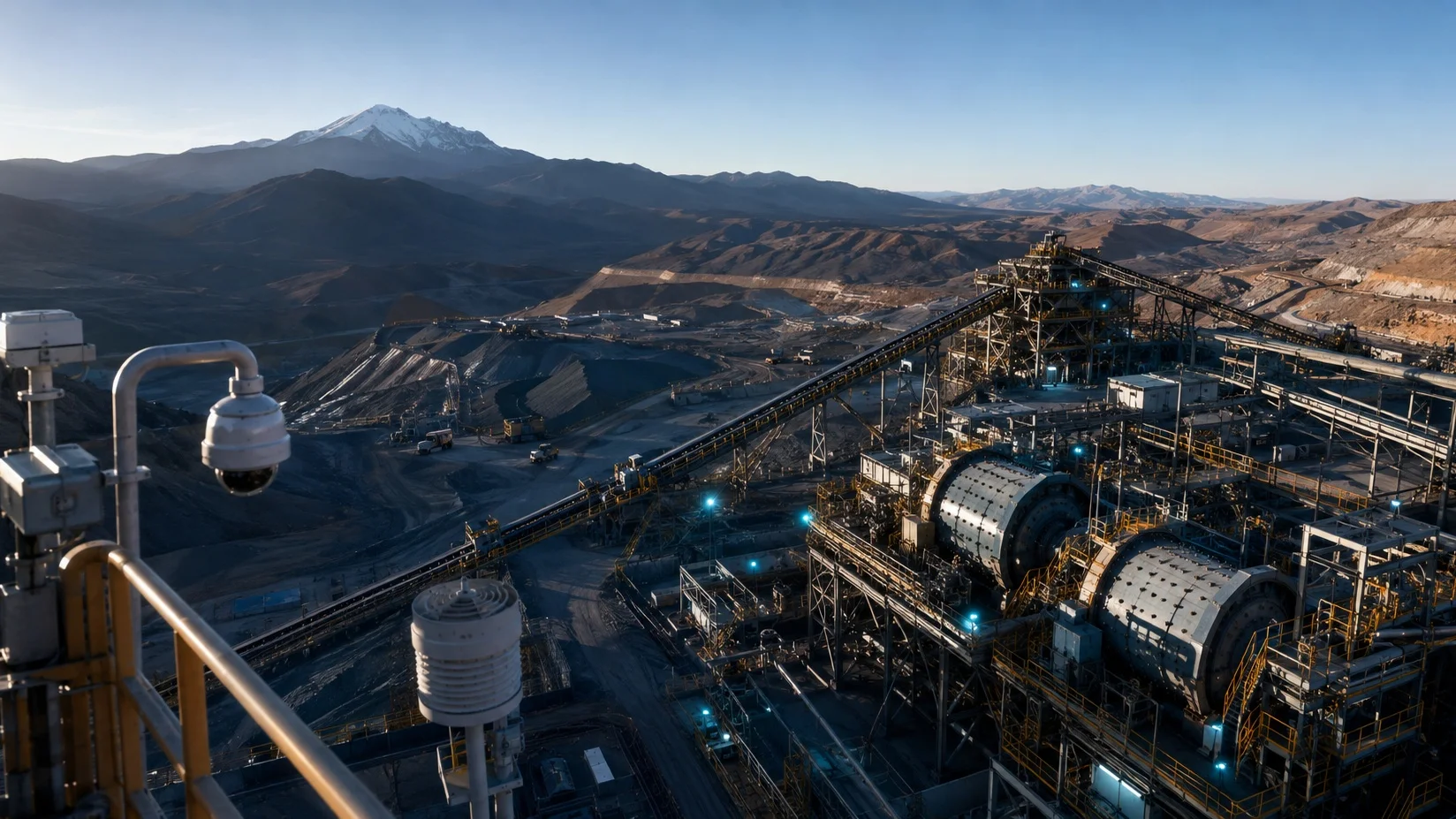
The operational intelligence opportunity
Mining sites already generate the data. The opportunity lies in using it while operations are still underway.
CCTV + Cameras
Videos across all operational areas
Operational Systems
Check-in, Oracle and facility maps
Machine Sensors
Vibration, weight and magnetic data
Lumirithmic Intelligence Layer
- Miners use existing badges or tags, while ruggedised cameras cover entrances and high-risk areas.
- Existing CCTV provides coverage across operational areas. Oracle and facility maps add operational context.
- Vibration, weight and magnetic sensors support wear & tear detection.
- A secure on-site edge server analyses camera, sensor and operational data against site-specific safety rules.
- Verified events trigger alerts, notify supervisors and create records, even during connectivity interruptions.
Improved Safety
Improved compliance via AI powered verification
Reduced Downtime
Earlier intervention due to language tuned ops logic
Faster Response
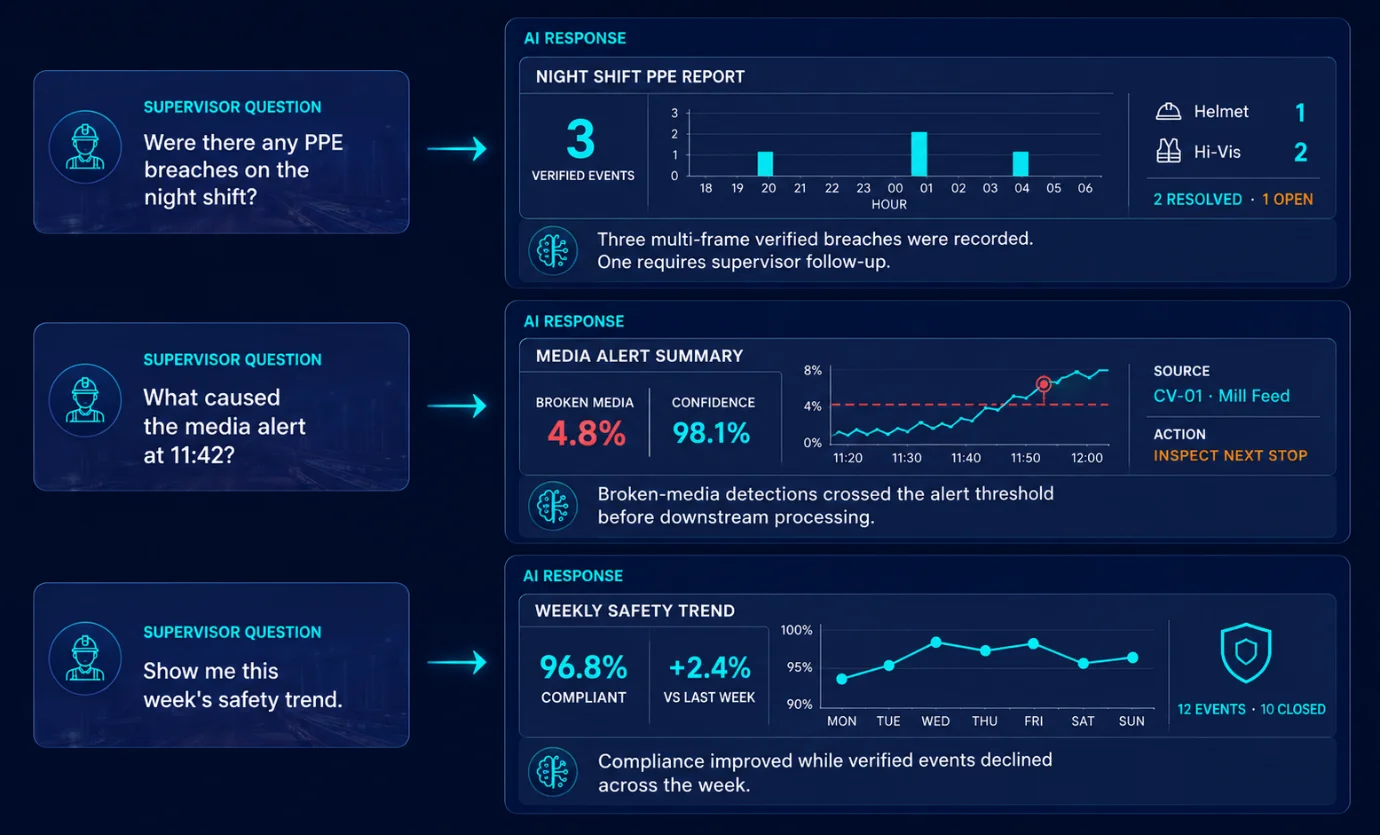
Faster investigation by asking questions
Greater Visibility
Query operational history for incident reports
Query intelligence data for precise information
Operational logic translates site procedures, safety rules and equipment thresholds into AI-readable decision rules. Field data from cameras, sensors and operational systems is continuously evaluated against this logic.
Supervisors can then ask questions in natural language—such as "What caused the media alert?"—and receive a concise, evidence-backed answer with relevant events, trends, confidence levels and recommended action.

Case 1: Real-time PPE compliance
Check-in data provides the context. CCTV shows whether required PPE remains visible on the operational floor.
1
Check-in
Assign required PPE rules by ingesting Compliance docs
2
Camera Routing
Activate the relevant camera feeds
3
Vision + Rules
Continuously report visible PPE and zone compliance
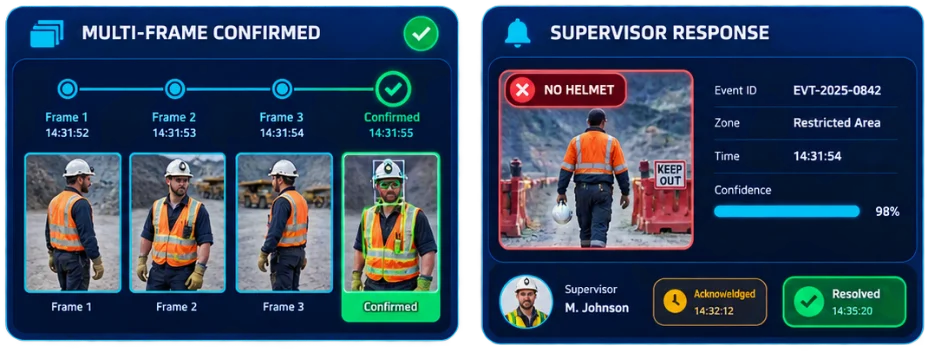
Multi-frame confirmation reduces alerts caused by brief occlusion
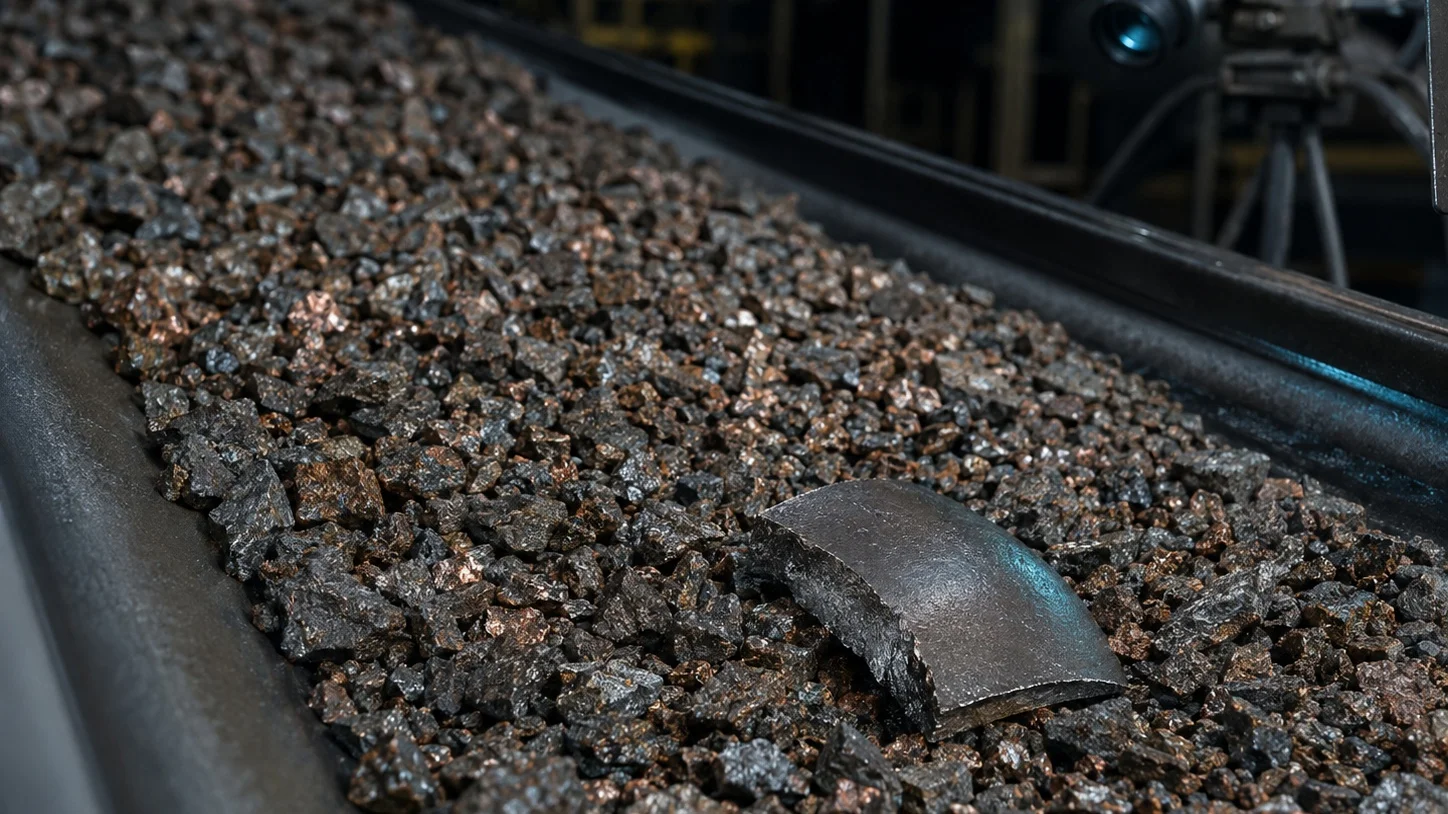
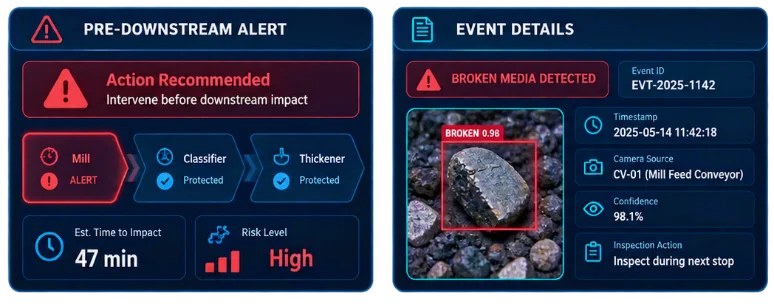
Case 2: Grinding media and mill failure detection
Fragments can enter processed material, force an inspection stop and damage downstream equipment.
Bespoke model training can detect these events.
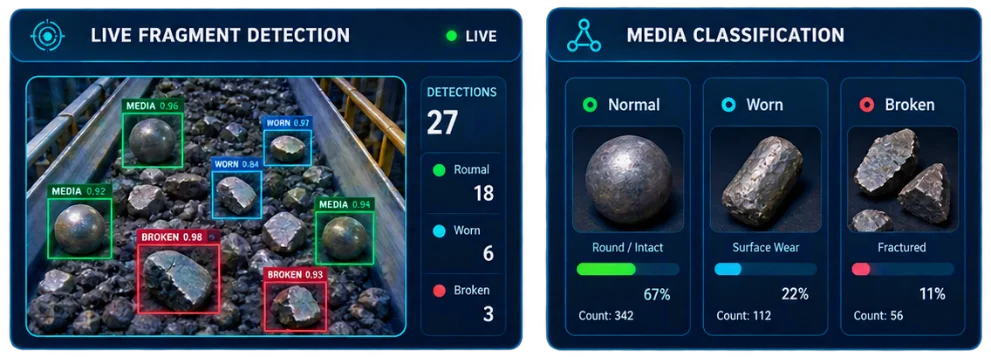
Camera Data
Shape, movement, classification and volume cues
Machine Sensor Data
Vibration, magnetic and weight thresholds
Historical Data
Failure baselines, degradation and maintenance history
Case 3: One dashboard, every signal
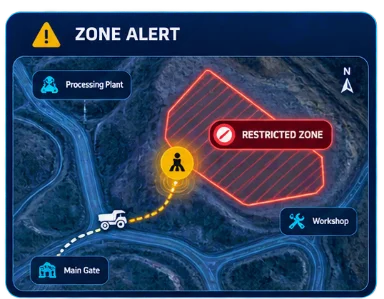
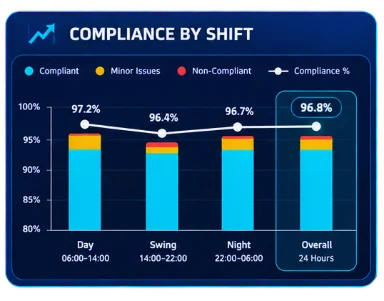
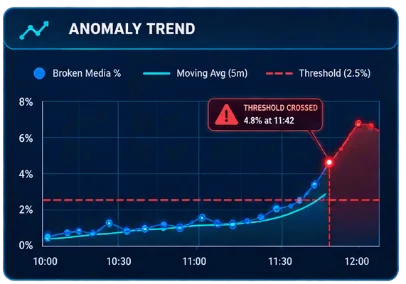
Zone breaches, shift compliance and anomaly trends all resolve into a single live dashboard, so supervisors see risk the moment it appears rather than after the fact.
Zone Alert
Geofenced restricted-zone entries are flagged the instant they happen.
Compliance by Shift
Verified events roll up into live compliance scores for every shift.
Anomaly Trend
Statistical baselines catch drift before it crosses a threshold.
Case 4: PPE compliance in production
The rollout validated one use case across one zone at one mine location before scaling.
Deployment Scope
- 3-5 CCTV feeds in the same area
- 1-2 worker categories with distinctive uniforms
- 3-5 PPE attributes selected on training complexity
- Existing check-in or equivalent integration
- Inference runs on site using prosumer class inference hardware
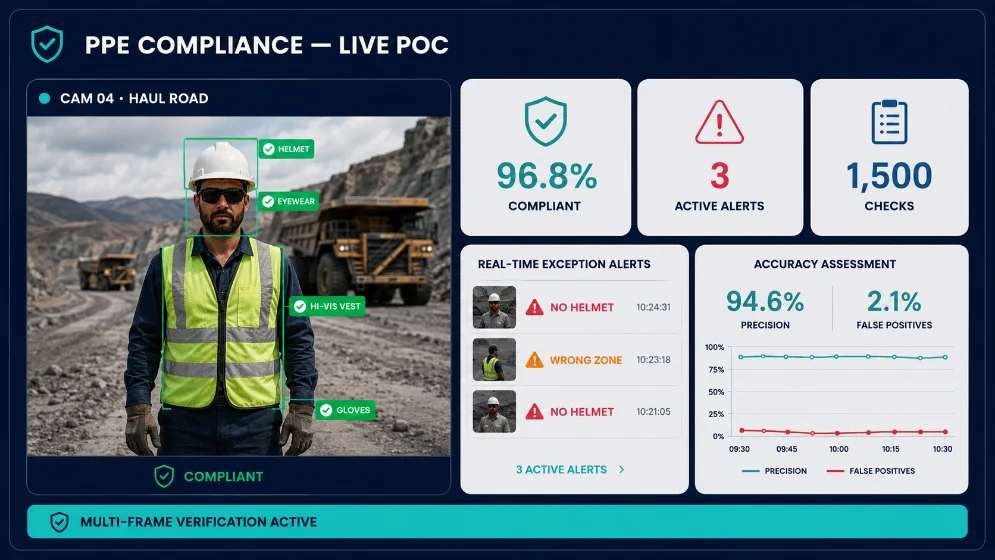
Live PPE compliance dashboard
Validation Methodology
Each gate resolved a specific technical risk before scaling to the next phase
Discovery
Confirmed cameras, zones, sensors and integration constraints
Offline Proof
Tested real samples and synthetic edge cases
Site Trial
Connected live feeds and tuned alert thresholds
Rollout
Scaled across zones and equipment to maximise coverage

Additional modules
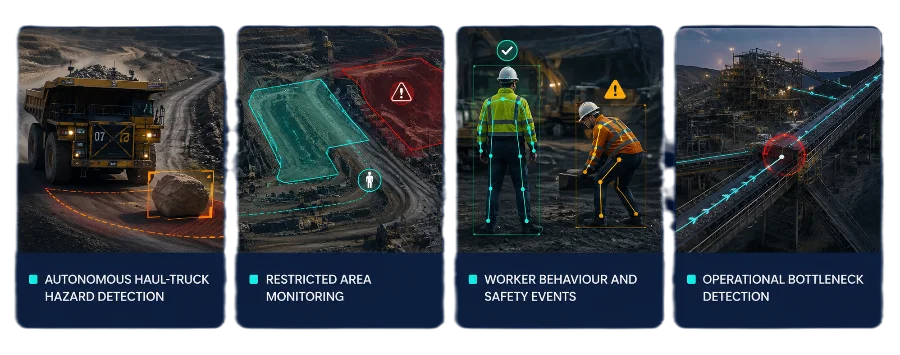
- PPE compliance across more uniforms
- Equipment anomaly detection
- Autonomous haul-truck hazard detection
- Restricted area monitoring
- Worker behaviour and safety events
- Operational bottleneck detection.
- Guassian Splats with Drone
The same integration layer supports additional camera and sensor use cases as the platform expands.